CURRENT PROJECTS
Mercury in the Arctic Ocean
GEOTRACES 2015
In early Spring 2015, I agreed to analyze mercury and methylmercury samples from the Arctic at the brand new BGC lab. We prepared and shipped the bottles to Norway.
Lars-Eric Heimbürger collected hundreds of snow, ice and melt-water samples on-board the German Ice Breaker Polarstern.
Polarstern is now traveling back to Bremen (Germany) with the precious load. The samples will be shipped back to Harvard for analysis.
This cruise made history! Find out how here
Update: The samples are at ESL and will be analyzed in January -February 2016
September 2016: All the samples have been analyzed we are preparing the manuscript!
Methylmercury in estuaries
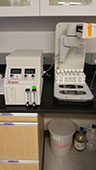
Tekran 2600 Helen Amos Record breaking MeHg calibration Plankton
In August 2014, we collected samples along the Northeastern USA shore
Water and plankton were collected at 12 stations in 5 estuaries.
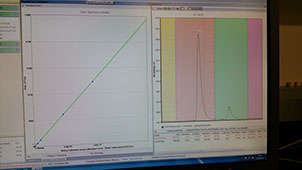
In May 2015, at the newly set up BGC lab, I measured total mercury and methylmercury (MeHg) in the water and plankton collected during the cruise.
Helen Amos helped in the lab and took nice shots of plankton samples.
The data is interesting and I look forward to presenting it at the ICMGP 2015.
Mercury and Methylmercury in Lake Melville, Labrador
Biogeochemistry Component
My goal is to establish a baseline for mercury cycling and methylmercury concentration in the system and fish consumed by the native Inuit population. Using experimental work and geochemical modeling, I am investigating how the damming of the main tributary will affect mercury cycling and fish concentration. The initial phase of the project (2012-2013) consisted of 2 sampling expeditions to measure mercury species (elemental, organic and inorganic) and ancillary data in the air, sediment and water of the estuary and its major tributaries.
Human Component
We are collecting hair and diet information with the help of our partners on the ground.
A first batch of hair samples has arrived and is being analyzed for mercury by Amelia Valberg and Ryan Calder.
Fish Component
Fish consumption is the primary source of methylmercury to humans and marine mammals. I measure methylmercury and mercury isotopes in Lake Melville fish , as well as several ancillary parameters to identify the origin of the methylmercury found in the fish.
Ultimately, the biota data will be incorporated into a bioaccumulation model for Lake Melville.
Update:
2014: I analyzed the 1st batch of fish
2015: 2nd batch has been received and is being analyzed by Miling Li.